
India is developing a 'Gross Domestic Knowledge Product' (GDKP) to identify and define its knowledge assets, a move aimed at safeguarding them amidst global efforts to monetise and 'weaponise' knowledge, according to NITI Aayog member R Balasubramaniam.

'They allow people to enter and exit. And there is transparency. There is market infrastructure. There is technology. There is cyber security. And then there are enough enablers.'

Prime Minister Narendra Modi has challenged Indian industry leaders to increase job creation and employee salaries, arguing that government tax concessions and income tax relief should translate into greater employment and economic activity. He also urged businesses to improve product quality for the domestic market and leverage new trade agreements for global competitiveness.

'Brokers have also sought revival of Section 88E of the Income Tax Act.'

Two foreign nationals, a man from Ghana and a woman from Uzbekistan, were arrested in Greater Noida on Monday for alleged drug-trafficking. Police recovered 920 grams of MDMA, valued at approximately Rs 1 crore, and seized a scooter used for the illicit trade. Efforts are underway to apprehend a third individual involved in preparing the MDMA.

US President Donald Trump has publicly defended Nvidia CEO Jensen Huang, calling him a 'very high-quality person' amidst allegations of an affair with a suspected Chinese spy and an ongoing FBI probe. Trump stated that Huang denied any knowledge of the woman's alleged ties to Chinese intelligence, and the President believes him.

'When you are content with your life, you become a much more difficult customer for companies trying to persuade you to spend.' 'When you are unhappy or constantly comparing yourself with others, you become more vulnerable to advertising and impulsive purchases.'

Sonia Gandhi's memoir "Belonging: A Journey of Love" details the tumultuous relationship between her and Maneka Gandhi, Sanjay Gandhi's wife. It covers Maneka's entry into the family, growing tensions, political ambitions, and eventual dramatic departure, which Sonia describes as a "reality show".

India does not need to win the model race to win the AI era. It needs to be the country that cannot be switched off, can be trusted by its citizens, and is useful to the rest of the world, asserts Rajeev Srinivasan.

From super top-ups and senior citizen cover to tax benefits and costly mistakes, here's a checklist to help your family stay adequately insured as medical costs rise.

Sonia Gandhi's memoir "Belonging: A Journey Of Love" shares personal anecdotes about her interactions with prominent world figures. She recounts observing Bill Clinton's behaviour at a reception, Nicolas Sarkozy's open discussions about his love life, and her poignant meetings with Princess Diana, highlighting their personalities and the dynamics of these high-profile encounters.

Financial independence begins not only with earning or investing more but also with knowing what one owns, understanding where one's money is held and taking responsibility for managing it.

Info Edge (India) Ltd, the parent company of Naukri.com, is undergoing a significant leadership change as founder Sanjeev Bikhchandani prepares to return as managing director and group chief executive officer. This transition follows Hitesh Oberoi's decision to step down from his executive roles after nearly 27 years with the company, though he will remain on the board as a non-executive, non-independent director.

Despite recent foreign portfolio outflows, India's long-term investment prospects remain strong, but the return of capital hinges on global financial conditions, relative valuations, and the country's ability to attract sustained foreign investment, according to foreign bankers at the Business Standard BFSI Insight Summit.

BRICS finance ministers and central bank governors have called for increased representation of emerging-market and developing economies in the IMF and World Bank, while also criticising unilateral tariffs and trade measures, as the expanded bloc aims to bolster financial cooperation amidst global fragmentation.

AIADMK chief Edappadi K Palaniswami has criticised Tamil Nadu Chief Minister C Joseph Vijay for his silence regarding a multi-crore international drug racket operating along the state's coastline. Palaniswami questioned if the racket was happening with the ruling TVK's knowledge, citing a recent 137 kg crystal methamphetamine seizure by the DRI and the alleged involvement of a TVK functionary. He demanded a comprehensive explanation from the Chief Minister.

Chief Economic Advisor V Anantha Nageswaran stated that 2026 marks an inflection point for India, akin to 1991, necessitating the country to become globally indispensable in carefully chosen sectors to build strategic leverage for accessing geopolitically contested resources amidst a series of external shocks.

Futures and options (F&O) trading suits investors with good market knowledge, sufficient risk capital, a tested strategy and strong discipline.

Tata Consultancy Services (TCS) plans for 80% of its new hires to possess digital and Artificial Intelligence (AI) skills, anticipating that the growing share of AI-led work will significantly boost its profit margins.

Akash Ambani is leading Jio Platforms' initial public offering (IPO), set to be India's largest, with a strategy that includes appealing to regional investors and drawing parallels to his grandfather Dhirubhai Ambani's historic public listing of Reliance Industries.

Experts at a national symposium in Shillong discussed the role of Artificial Intelligence in tourism, emphasising that AI should support human judgment, local knowledge, and cultural values rather than replace them. Discussions highlighted the need for robust policies to address ethical concerns, safeguard livelihoods, and preserve cultural heritage while leveraging AI for innovation and sustainability in the tourism sector, particularly in Meghalaya.

The RSS-affiliated Bharatiya Kisan Sangh (BKS) is set to host its inaugural women's conclave in New Delhi, aiming to advocate for increased representation of women farmers in agricultural policymaking. The event will bring together 7,000 women farmers to discuss their significant contributions to farming, livestock, and fisheries, and to push for policy changes, including a shift from MSP to MRP for produce.

A new report by TeamLease Digital highlights a significant AI-ready talent gap in India's technology industry, with shortages of 53-60 per cent in Generative AI and cloud skills. The report indicates that only 16 per cent of IT professionals possess AI skills, leading to rising salary premiums for AI-core roles and a projected demand for over 10 lakh GenAI roles by 2026.

While AI can help automate routine, repetitive tasks, jobs that require high emotional intelligence, communication skills, creativity and the ability to work in unpredictable situations are likely to withstand the rise of AI, says Kumar Rajagopalan, vice president (strategic initiatives) and country head (India), at Dexian, a global provider of IT consulting, digital transformation and workforce solutions.

Dedicated Ayush dispensaries increased from 26,130 in 2013-2014 to 37,804 in 2024-2025, while hospitals rose much more slowly, from 3,605 to 3,885.
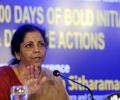
Union Finance Minister Nirmala Sitharaman has urged significant investment in AI infrastructure, semiconductors, and quantum technology, identifying them as India's next major growth frontiers. Speaking at an IIT Madras Alumni Association event, she emphasized the need to build hardware, skills, and institutional ecosystems to harness these technologies, countering perceptions that India is lagging in AI. Sitharaman also highlighted the potential for increased investment in defence production, particularly in unmanned systems and drones, stressing collaboration between academia and industry.
'The Rs 35,000 crore of capex every year, I don't get to sign 35 paise out of this.'

Becoming a shareholder isn't about predicting markets perfectly. What matters more is recognising when you're financially and mentally prepared to participate in wealth creation. If you've been wondering when you should start investing, here are five signs that suggest you're already ready.

India's six publicly listed Real Estate Investment Trusts (REITs) collectively distributed approximately 3,136 crore to over 485,000 unitholders during the first quarter (April-June) of the current financial year (FY27), demonstrating the sector's resilience despite global uncertainties.
Union Finance Minister Nirmala Sitharaman expressed strong confidence in India achieving over 10 per cent economic growth, advocating for increased technology adoption and innovation. She urged overcoming scepticism and highlighted technology's transformative role in agriculture and public sector reforms, while also launching a new fund and book at an IIT Madras event.

Zoho co-founder Sridhar Vembu argues that predictions of AI's catastrophic outcomes are overstated and a global pause in AI development is improbable. He urges India to adopt an independent AI strategy, focusing on extensive foundational R&D across sectors, while remaining wary of market monopolisation attempts by major tech players. Vembu also highlights concerns about AI's impact on human judgment, skill development, and job markets, particularly for junior professionals.

Assam Chief Minister Himanta Biswa Sarma launched the North East Seva Innovation Challenge (NESFIC), envisioning the region as India's 'living laboratory' for technology and problem-solving. The initiative aims to empower young innovators to address real-world challenges faced by government, industries, and citizens, with a focus on practical implementation and government procurement.

Industry experts advocate for India to develop its own artificial intelligence (AI) safety framework, distinct from US or EU models, to address unique challenges like deepfakes and cyberattacks. They call for a comprehensive commitment involving all stakeholders and a hybrid regulatory approach combining voluntary and binding measures, as the Indian government also considers new AI regulations.
Microsoft India and South Asia President, Puneet Chandok, discusses the company's strong belief in human-centric AI development, significant investments in India's cloud and AI infrastructure, and the country's pivotal role as an AI market, talent hub, and technology builder. He highlights AI's impact on jobs and the need for responsible innovation.

If a bank sold the policy, complain to its grievance cell and, if necessary, escalate the complaint to the Reserve Bank of India Ombudsman.

The search for N Chandrasekaran's successor as Tata Sons Chairman has reportedly narrowed to Tata Steel CEO T V Narendran, Tata Sons Executive Director Saurabh Agrawal, and NSE MD & CEO Ashish Chauhan, with Chauhan emerging as a potential 'dark horse' candidate.
SEBI Chairman Tuhin Kanta Pandey stated that cybersecurity is now a board-level concern, not just an IT challenge, emphasising the need for caution when deploying artificial intelligence in critical infrastructure. He highlighted that AI for cybersecurity must be secure, governed, and accountable, and also addressed the emerging risks from quantum computing, urging collective resilience and sharing of best practices among regulators.

Prof Ajit Kumar Chaturvedi, Vice-Chancellor of Banaras Hindu University, highlighted Artificial Intelligence's transformative potential in healthcare, emphasising its role in augmenting doctors' capabilities and enhancing efficiency. Speaking at PGIMER's Foundation Day, he stressed the need for India to develop AI solutions tailored to its unique healthcare realities, moving beyond being a mere consumer of Western-trained systems. PGIMER Director Vivek Lal also detailed the institute's expansion and commitment to affordable healthcare.

Prime Minister Narendra Modi cautioned against the 'weaponisation' of technology and critical minerals at the BRICS summit, advocating for cooperation to foster shared prosperity. Concurrently, Chinese President Xi Jinping announced plans for an open-source AI ecosystem for BRICS nations, positioning Beijing as a key technology partner amid global AI competition.

BRICS members have expressed 'serious concerns' over the unilateral imposition of trade and finance-related measures, including higher tariffs and non-tariff barriers, stating these actions distort trade and are inconsistent with WTO rules. The grouping also highlighted elevated risks to the global economic outlook due to geopolitical tensions, trade fragmentation, and protectionism.
